

TECHNICAL SPECIFICATIONS
Superior Performance
Key elements in achieving optimum sonic performance with a First Sound linestage preamplifier
Pure Presence
A First Sound linestage is designed around a minimalist, direct approach to audio reproduction. Every circuit choice, material selection, power supply design, grounding method, and mechanical detail serves a single purpose: preserving purity and presence.
The result is a linestage preamplifier known for lifelike clarity, dimensional sound staging, tonal richness, quick transient response, natural pace, and an immersive connection to the musical experience of First Sound.
Core Technology
The First Sound linestage uses a pure Class A triode circuit with no negative feedback. Tube regulation is employed in the power supply with massive power supply storage. There is only one triode tube per channel in the signal path. This ensures the highest level of signal purity possible in an active circuit. The results are unmatched sonic performance along with very high reliability. The circuit uses a minimalist and direct approach, reflecting the First Sound design philosophy.
The result is a direct, immediate presentation that preserves the life of the signal while allowing the music to emerge with clarity, presence, and natural ease.
TECHNICAL
Specifications
Frequency Response: 5 Hertz to 250K Hertz, +0, -3db
Input Impedance: 150 Kilo Ohms
Output Impedance: 1200 Ohms
Absolute Phase: Inverting
Total Harmonic Distortion: less than 0.4% at 2V
Noise: Better than 91 db below 2V
Maximum gain: Greater than 15 db at 1 kilohertz
Tube Complement: 2 OA2
Maximum input: 6 Volts RMS
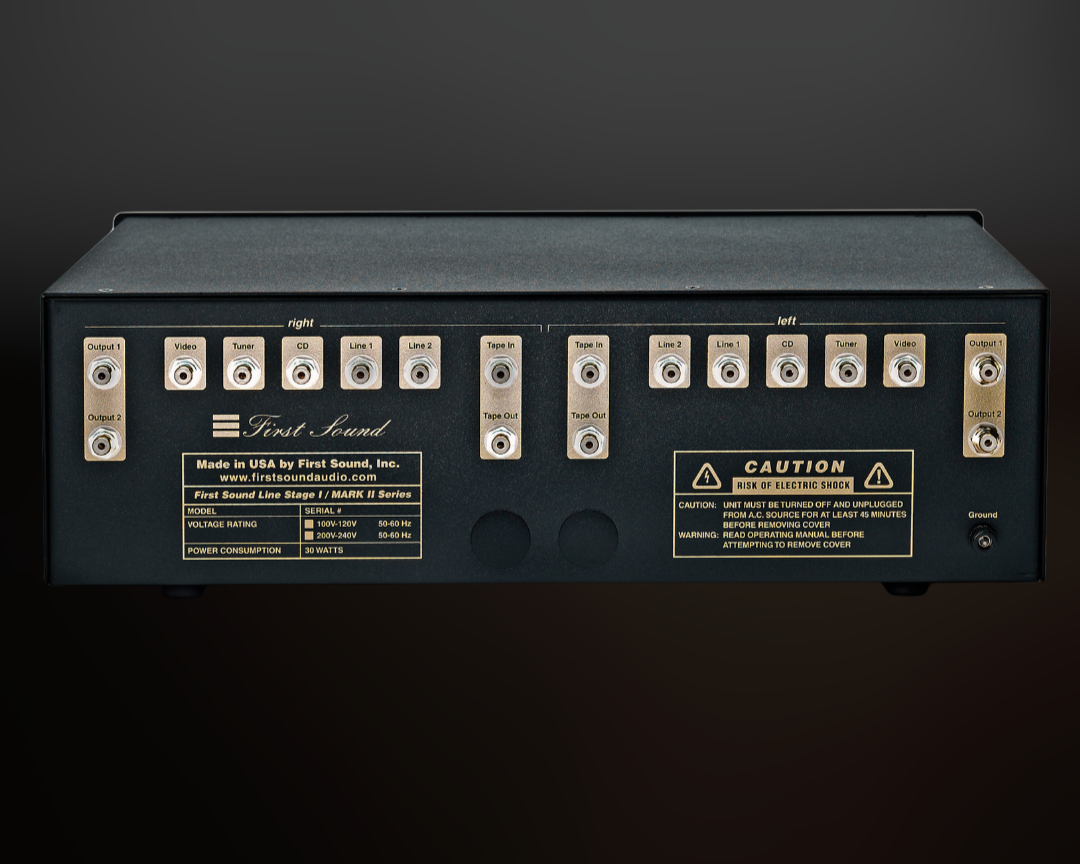
Inputs: Six line-level inputs
Outputs: Two main outputs, one tape output
Dimensions: Main chassis 18″ W x 14″ D x 5.5″ H
Power Supply: 8″ W x 13″ D x 5.5″ H
Shipping Weight:
Paramount Statement: 159 lbs
Paramount: 81 lbs
Presence Deluxe 4.0: 78 lbs
Presence Deluxe: 57 lbs
Information herein is subject to change without notice.-
The First Sound linestage uses a power supply that is separated from the main chassis and audio circuitry. It is connected via a custom umbilical cord. The sonic performance is greatly enhanced using this configuration.
A power transformer emits different kinds of spurious radiation and, by its nature, vibrates. These two elements negatively affect the music signal when placed close to the audio circuit and its components, resulting in a degradation in performance. Removing the power transformer away from the main chassis prevents this from occurring.
Though implementing an external power supply is expensive, it nevertheless ensures the purity of the signal from spurious radiation and vibration from the power supply.
This separation creates a quieter foundation for the audio circuit, helping the listener hear more of the music itself and less of the interference that can obscure it.
-
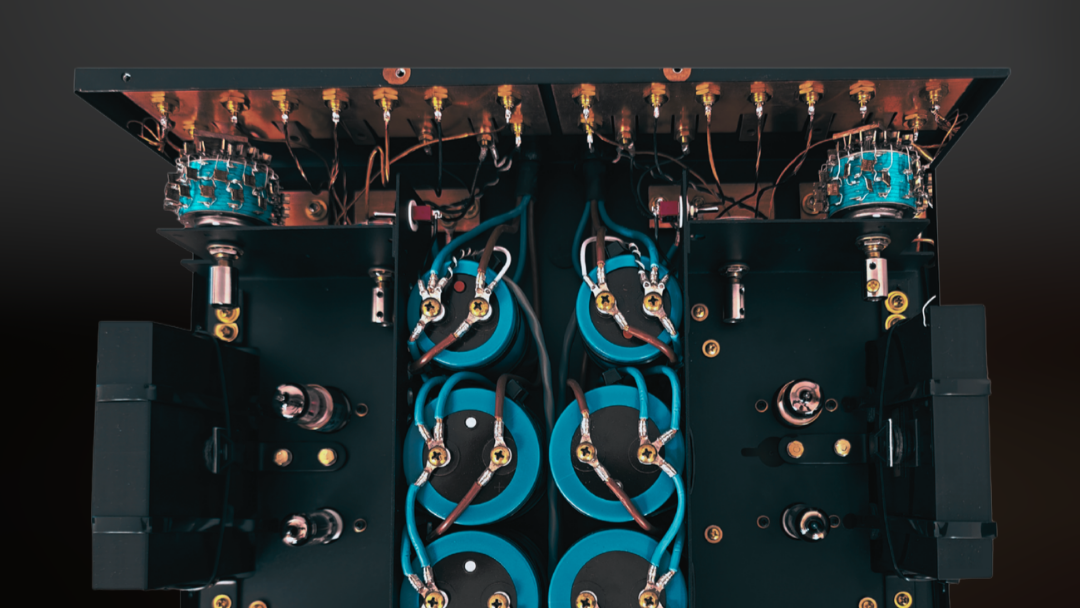
The First Sound power supply is unparalleled in the industry. The power supply uses large 2.0″ x 4.125″ computer grade electrolytic capacitors as storage. These provide vast amounts of power reserves. The total capacitance used in the Presence Deluxe MkIII-SI is at least 230,000 mfd. The total capacitance can go up to 578,000 mfd and higher depending on the model.
The extremely large power storage used ensures an enormous amount of power is readily available instantaneously. There is no delay or lag in the power delivery. This provides stability and filtering in the power supply.
The result is exceptional sonic attributes delivered by the massive power supply. It lowers the noise floor, creates a soundstage that is stable, spacious, free of grain, smear, electronic haze, and more. The transients extend across the full frequency range with blazing speed and recovery.
Bells and cymbals are rendered with lifelike realism, capturing their texture, weight, and natural metallic shimmer. Bass plunges to remarkable depth with speed, authority, and weight, while preserving the subtle nuance, texture, and delineation of each note.
This is where the technical scale of the power supply becomes a musical experience: a lower noise floor, greater dynamic confidence, and a presentation that feels both powerful and unforced. The result is music revealed with remarkable detail and purity.
-
The MkIII-SI-x2 employs several proprietary components specifically designed to lower and isolate electrical noise.
These components have the unique ability to reduce component-generated power line noise without inhibiting current delivery. They prevent power line noise from one component contaminating the other adjacent electronic components.
These filter components consist of proprietary multi-stage filters that reduce power supply-generated noise without the use of heavy transformers, coils or large capacitors.
The audible result is a cleaner, quieter backdrop that allows finer textures, spatial cues and music itself to come alive.
-
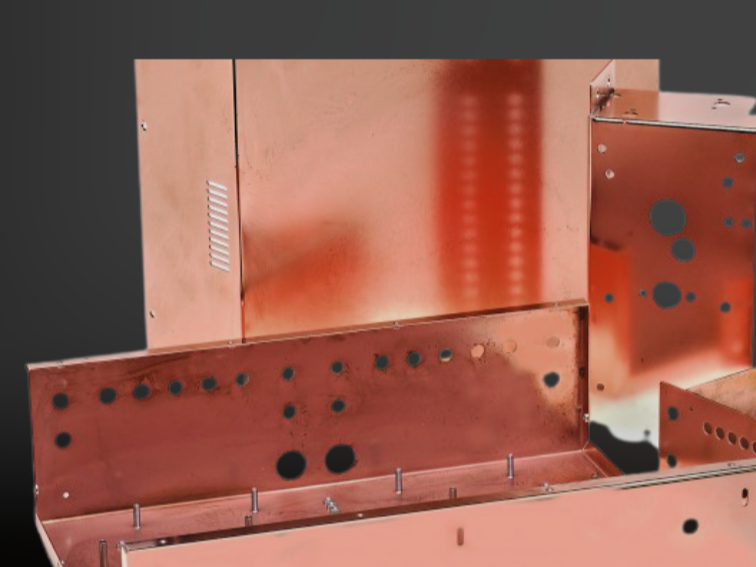
The main chassis is made from .06-inch-thick cold rolled steel and plated with copper as per MIL-C-14550B Class 2 specification. The combination of steel and copper provides exceptional shielding against spurious radiation in the environment to further protect the audio circuitry from external interference and allow it to perform at its highest potential.
Copper plating also lowers the resonant frequency of the steel chassis to a level that is harmonic with the musical signal. Rather than serving as a simple enclosure, the chassis becomes part of the performance architecture, helping preserve the signal while supporting a more natural and composed musical presentation.
-
The umbilical cord uses the advanced Power Supply Delivery System (PSDS). Four large 12-gauge high purity OFC copper wires with advanced geometry are used with mil-spec high current Amphenol connectors. Close to over 500 precise steps are needed to craft this unique umbilical cord. These same robust wires are used from the external power supply all the way to the main circuit board. The combination of all these elements allows for the unimpeded and direct flow of power to the audio circuit.
This direct flow of power supports the speed, stability, and effortlessness that defines the First Sound presentation.
The upgrade also includes PSDS, or Power Supply Delivery System, an advanced system utilized for the power supplies, along with upgraded main circuit boards, upgraded power supply circuit boards, and an additional 500 steps in craftsmanship.
-
The main chassis in every First Sound model uses true dual mono construction, with controls and components duplicated for the left and right channels. This separation reduces the possibility of crosstalk, which can compromise focus, presentation stability, imaging, grain, and the clear delineation and placement of individual instruments within the soundstage.
Minimizing crosstalk through strong channel separation is essential to great sonic performance. Dual mono construction is one of the most effective ways to achieve this, helping create the focused imaging, dimensional soundstage, and stable placement that allow instruments and voices to appear with greater realism.
-
In adherence to the true dual mono construction philosophy, First Sound employs separate left and right mounting platforms. These are made from the same material as the chassis and also plated with copper. These platforms are shaped in an L-figure with one of the planes held vertically to provide further shielding from the opposite channel. Each platform houses the separate circuit boards on its underside for further shielding, as well as the attenuators, selector switches, and computer-grade electrolytic capacitors.
By extending the dual mono philosophy into the physical layout, these platforms further support channel separation, sound clarity, and presentation stability.
-
Four long brass rods are apparent when looking inside a First Sound model. These rods extend the controls for the volume and selector switches located at the back of the unit. Keeping the switches at the back allows for a very short signal path. This philosophy extends to the traces on the circuit boards as well. A short signal path lessens the possibility of sonic degradation while maintaining the integrity of the signal.
The shorter and more direct the path, the less opportunity there is for the signal to lose immediacy, clarity, or musical nuance.
-
The complex grounding topology used in all First Sound linestage models is derived from the First Sound Passive Unit. This grounding technique is exclusive to First Sound and cannot be found elsewhere in the industry or in any other linestage. It provides a quieter backdrop that allows the music to unfold with greater completeness. It also supports quick, controlled bass response and full-bodied high frequency expression.
Proper grounding is essential to sonic performance. Because the relationship between the positive and negative legs of the signal is delicate, First Sound applies the experience gained from the grounding network of the Passive Unit to help each linestage excel across the full musical presentation.
The result is greater silence between notes, stronger bass definition, and a more complete expression of each musical note.
-
The current requirements of the First Sound linestage are relatively small at less than 1 amp. The current rating of the bridge rectifier used is 15 amps. What may appear excessive is, in fact, essential to the design. Aside from having great safety margins in using overly large current ratings, this again ensures the unimpeded flow of electrons to their destination, resulting in a power supply that is quick, instantaneous, and responsive to the needs of the music.
The bridge rectifiers are made from discrete parts using Hexfred diodes. This translates into a focused, effortless, and natural performance with clear and defined presentation at musical extremes. This responsiveness is heard as ease, speed, and control, allowing the music to move naturally without strain or compression.
-
The On/Off switch of a First Sound linestage is an electromagnetic circuit breaker. It functions as a regular On/Off switch and replaces the conventional A.C. fuse. Unlike a standard fuse, where the A.C. passes through a very thin wire, the electromagnetic circuit breaker provides a more solid and direct contact path. Its connections are directly soldered to ensure full contact at the electrical junction, supporting cleaner, more stable current flow.
By preserving a more solid electrical contact at this point, the design supports the same sense of stability and continuity heard in the unit’s performance.
-
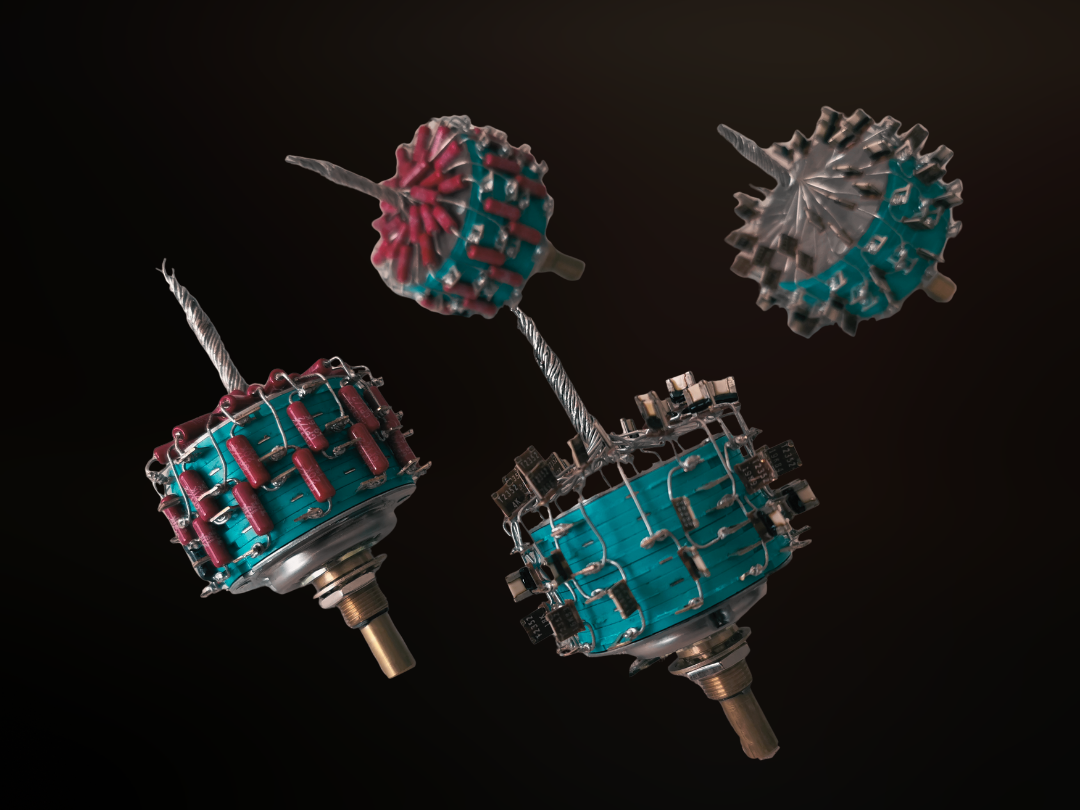
The First Sound linestage uses an array of discrete resistors on a switch to set the volume level. This is called an attenuator. These handmade attenuators are superior to conventional volume potentiometers, commonly known as pots, in the way they provide attenuation.
In a pot, resistance is created by a film of carbon spread over a plastic surface. The carbon varies in thickness from one end to the other, which creates the change in volume level. An attenuator works differently, using discrete resistors with specific values to set each attenuation level. The performance of a dedicated resistor is far superior to relying on carbon over plastic film.
The switch used in the attenuator of all First Sound models is the same switch used to select the inputs. It is massive, with a current-carrying capacity of 25 amps. This very high rating helps ensure uninterrupted, low-loss signal delivery across the full frequency spectrum.
Premium metal film resistors are used, while the LTV92 attenuator uses the unparalleled naked Vishay thin foil resistors. Each attenuator is individually crafted by hand with meticulous attention to contact and construction. The resistor leads are looped through the solder lugs, crimped, and then soldered. This extra step ensures mechanical reliability and optimum contact between the surfaces.
This careful hand-crafting results in a presentation that is clear, focused, and natural. By preserving subtlety and minimizing grain, smearing, rounded edges, and loss of instrumental detail, the attenuator allows volume control to serve the music rather than obscure it.
-
Dielectric refers to the insulating material around or between electrical conductors. In wire, it is the material surrounding the metal conductor, such as Teflon, polypropylene, silk, plastic, or air. In audio, these different insulating materials can affect the signal performance.
First Sound uses air dielectric in the audio signal path. Practically speaking, this means no dielectric material surrounds the signal wire, making it the most direct way to eliminate dielectric influence on the signal. The result is greater signal purity and a presentation that is more transparent, open, and faithful to the original musical information.
-
These carefully selected premium resistors represent the highest standard available for this application. Their metal film foil resistive element provides unparalleled performance, making them the only resistors used in the main circuit. Anything less would compromise sonic performance.
This choice helps preserve the clarity, precision, and natural tonal character of the First Sound signal path.
-
Gold-plated, solid body RCA connectors meet First Sound’s performance standards. The solid body construction helps maintain an uninterrupted path for electron flow, while the gold plating provides superior contact and resistance to oxidation. These high-quality gold RCA connectors are selected for their sonic performance and signal integrity.
Every detailed contact point is designed to preserve continuity, tonal integrity, and low-level detail.
-
All First Sound models use circular damping materials and other vibration absorption devices to tune overall performance. Vibrations and resonant frequency play a significant role in the sonic character of a chassis, so extensive listening tests are conducted to determine the precise level of damping required.
The chassis is tuned to remain in harmony with the overall presentation, helping the linestage sound controlled without becoming constrained, while preserving tonal body and natural musical flow.
-
First Sound uses custom premium wire from select manufacturers, with high-purity OFC copper employed exclusively in the signal path. Various wire sizes are used throughout the signal path, with specific wires chosen for particular portions of the circuit. The careful blending of these wire sizes is part of the design approach used to achieve the highest level of performance.
This precise wire selection helps support tonal balance, speed, and purity throughout the signal path.
-
Non-magnetic hardware is employed throughout the unit, particularly in critical areas close to the audio signal. It is also placed where necessary to help balance the resonances of the chassis. By reducing unwanted magnetic influence and supporting resonance control, this detail contributes to the overall purity and composure of the performance.
Upgrades + Components
One of the defining features of a First Sound preamplifier is its unique upgrade options. Each model can be elevated through a combination of bespoke upgrades, creating a path toward higher preamplifier performance and system refinement over time.
Each First Sound component is engineered to enhance a specific aspect of sound presentation. Together, these carefully developed advancements define the progression of First Sound's preamplifier range.
All contents are subject to change without notice. Certain models, upgrades and components are subject to limited availability.
-
The Paramount Upgrade includes upgraded Stage 2 capacitors and Paramount grounding topology.
-
The Paramount Plus Upgrade includes upgraded Stage 3 copper capacitors and Paramount grounding topology.
-
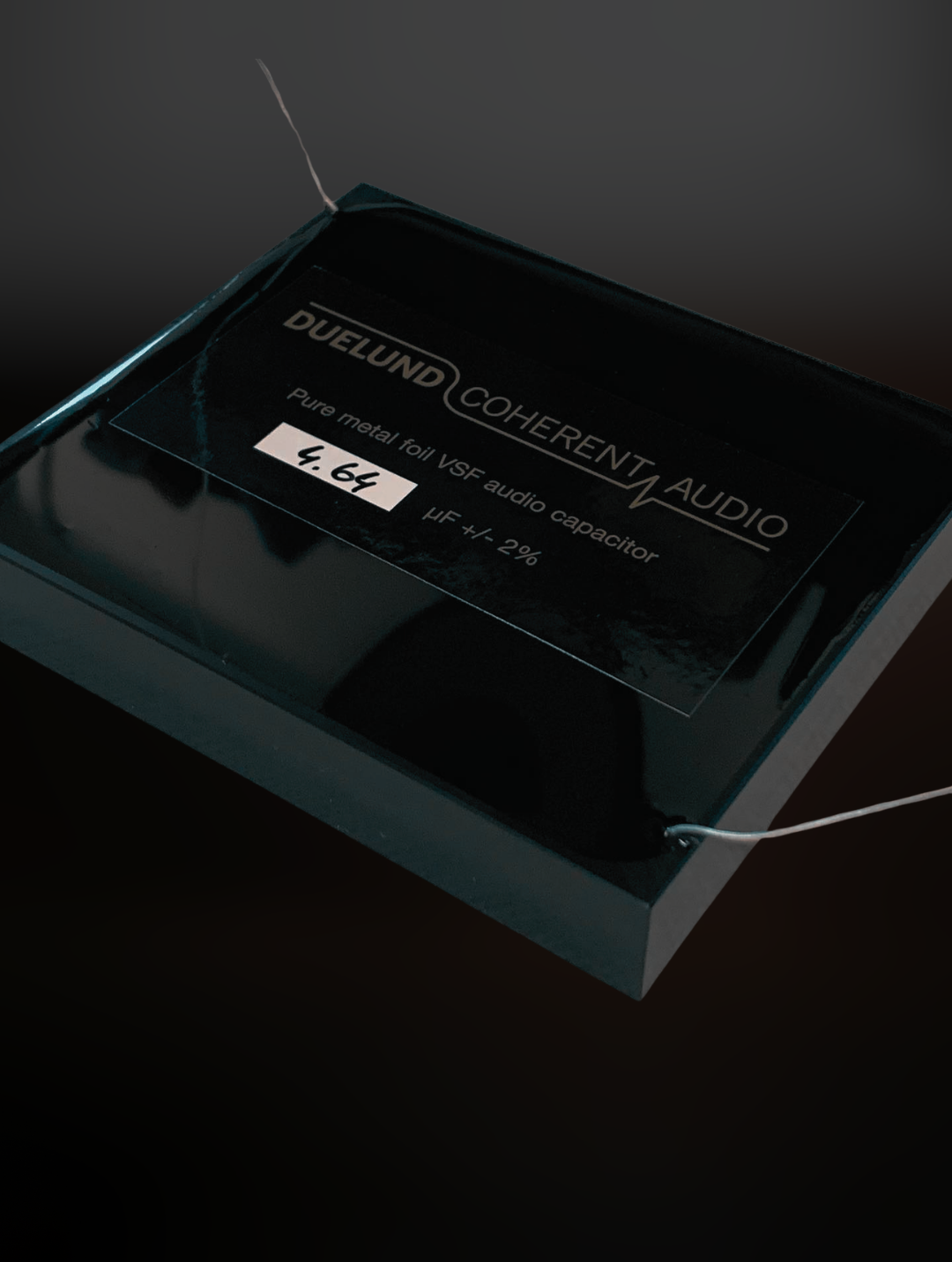
The Special Edition Upgrade includes upgraded Stage 4 copper capacitors, custom Duelund VSF DC copper capacitors, expanded power supply capacitors, and SE grounding topology.
-
The SSE Upgrade includes upgraded Stage 5 copper capacitors, the custom Duelund Black VSF DC copper capacitors, expanded power supply capacitors, and SE grounding topology.
-
The MkIII-S upgrade introduces the PSDS, or Power Supply Delivery System, an advanced power delivery system that significantly lowers the noise floor. The PSDS is a key element in all First Sound MkIII-SI-x2 models and provides a gateway to significantly higher levels of performance. All First Sound versions, particularly the MkI, MkII, and MkIII, benefit greatly from the PSDS.
-
The MkIII-SI-x2 Upgrade is the latest and most definitive upgrade available, comprising four elements that each deliver a dramatic improvement in performance and, when combined, produce an extraordinary advancement in sound quality.
These include upgraded main circuit boards, resonance control for both the main chassis and external power supply, improvements to key elements of the power supply noise-filtering system, and specialized processing applied to main components. Together, these advancements elevate the MkIII-SI-x2 beyond all previous versions.
-
The LTV 92 Ladder Type Attenuator uses a pair of ladder attenuators utilizing a total of 92 naked Vishay resistors.
-
The DPS 4.0 External Power Supply uses two SPS 2.0 External Power Supplies and provides a completely separate grounding system for the left and right channels.
-
The input wire contributes significantly to the overall presentation. Special wires are used for various inputs, allowing the sound presentation to be matched to the owner’s system and listening preferences. Additional special wire is available as an option.
-
Custom finishes are available beyond the standard clear anodized finish in silver.
FIRST SOUND WARRANTY
Our commitment
First Sound preamplifiers are engineered for lasting reliability. Should your preamplifier ever require service, please contact us. We will begin with a preliminary diagnosis to help identify and isolate the cause.
Throughout the process, our approach to service is simple: we treat you the way we would want to be treated.
For added assurance, all First Sound products include a five-year service and parts warranty.

Contact us
For inquiries regarding First Sound product details, availability, custom preamplifiers and bespoke upgrade options, we invite you to get in touch.